Ninth Circuit Rules Against Portland Residents Seeking Protections from Chemical Munitions Exposure
November 10, 2026
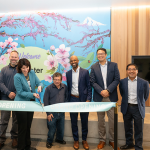
REACH continues to support residents as they share their experiences through a collaborative community art project.
PORTLAND, Ore. – Today, the U.S. Court of Appeals for the Ninth Circuit issued a 2–1 decision in REACH Community Development et al. v. U.S. Department of Homeland Security et al., overturning a lower court order that had restricted federal agents’ use of chemical munitions in ways likely to expose residents of Gray’s Landing, an affordable housing community directly across from Portland’s Immigration and Customs Enforcement (ICE) facility.
The majority ruled that Gray’s Landing residents and REACH had not shown they were likely to win their constitutional claim. The court concluded that the Constitution does not establish a right to be free from exposure to chemical agents used by federal officers for crowd control.
Judge Ana de Alba dissented, concluding that the district court properly found residents were likely to succeed on their constitutional claim. Her dissent pointed to evidence of widespread, repeated and indiscriminate deployments of chemical munitions, the government’s knowledge of the resulting harm to residents, and the apparent use of chemical munitions for social media content creation. She concluded that the government’s conduct demonstrated a “protracted failure even to care.”
For months, federal agents deployed chemical munitions toward and around the housing complex during protests outside the nearby ICE facility. Residents, including children, seniors, veterans, and people with disabilities, reported that chemical agents repeatedly seeped into apartments, hallways, and common areas, causing respiratory distress, chest pain, panic attacks, and other health impacts. Some residents reported sealing their homes and wearing gas masks indoors to limit exposure.
Earlier in the case, the district court issued an injunction prohibiting federal officers from deploying tear gas, smoke grenades, pepper balls, and other crowd-control agents in ways likely to reach the 209-unit residential community. Today’s appellate decision vacates that injunction.
The plaintiffs included Gray’s Landing residents and REACH Community Development. They are represented by Democracy Forward, Protect Democracy, Jacobson Lawyers Group PLLC, and Bradley Bernstein Sands LLP.
Following the decision, plaintiffs issued the following joint statement:
“We are disappointed by the court’s decision and the outcome of this case. Throughout these proceedings, residents shared deeply personal accounts of how activity outside their homes affected their health, sense of security, and ability to peacefully enjoy where they live.
While the court has ruled against our claims, nothing changes the experiences of the families, children, seniors, veterans, and people with disabilities who came forward to tell their stories. We remain grateful to the residents who courageously spoke up and advocated for their community.
This case has always been about the safety and well-being of the people who live at Gray’s Landing. While we are disappointed by today’s outcome, we remain committed to supporting residents, advocating for their safety, and ensuring their experiences are not forgotten.”
To support residents in processing their experiences, REACH is working with Gray’s Landing residents, Portland State University’s Center for Public Interest Design, and local artists on The Window Project, a collaborative art initiative that will give residents an opportunity to share their experiences through artwork displayed in the building’s street-facing windows. The installation will invite neighbors and passersby to pause, reflect, and see Gray’s Landing not simply as a location, but as a community rich in stories, creativity, and resilience.
“The experiences of Gray’s Landing residents deserve to be heard, acknowledged, and treated with care,” said REACH Community Development CEO, Margaret Salazar. “The Window Project creates an opportunity for residents to come together and, through their own creativity, express their experiences to help shape how their community is represented. We hope this process offers space for connection, reflection, and healing, while honoring the strength and resilience residents have shown. Most importantly, this is their story to tell. We are grateful to our partners at Portland State University’s Center for Public Interest Design and the local artists who are helping bring residents’ voices and perspectives to the windows of Gray’s Landing.”
Read the Ninth Circuit’s decision here. Learn more about this case here.
The case is REACH Community Development et al. v. DHS, and the legal team at Democracy Forward in this case includes Jeffrey Dubner, Anna Deffebach, and Brian Netter.
- # # # -
Democracy Forward Foundation is a national legal organization that advances democracy and social progress through litigation, policy, public education, and regulatory engagement. For more information, please visit www.democracyforward.org.
REACH Community Development is a nonprofit affordable housing provider serving the Portland metropolitan region and Southwest Washington. REACH creates opportunities for people to thrive by developing and promoting equitable access to quality, affordable homes, supportive services, and community. For more information, please visit www.reachcdc.org.
Contact:
Lauren Schmidt, Director of Communications
REACH Community Development
lschmidt@reachcdc.org